“The Budget Was Approved. The Costs Came Later.”
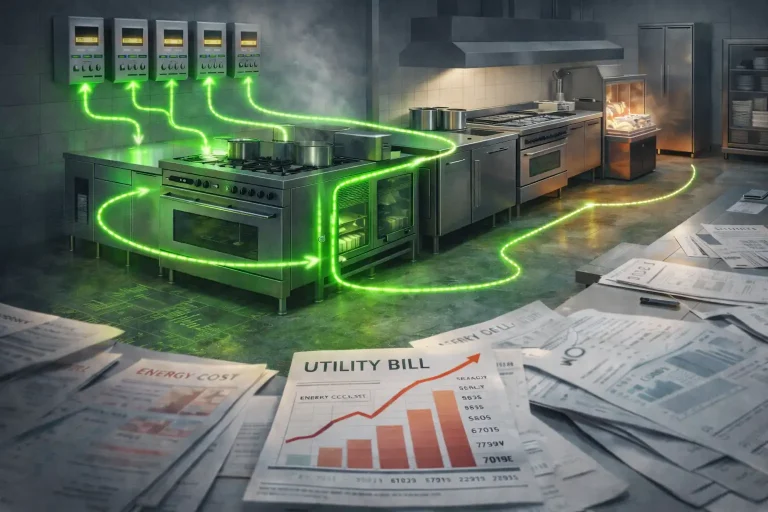
In many hotel and resort developments, kitchen budgeting looks clean on paper. CAPEX is approved, BOQ is signed, and procurement moves fast. Then operations begin — and the real cost story starts to appear. We’ve encountered this pattern repeatedly in turnkey kitchen projects across Africa, the Middle East, and Europe: the kitchen was delivered within CAPEX, but it failed on OPEX.
In commercial kitchen projects, budgeting is not about spending less. It’s about spending in the right phase. CAPEX and OPEX are not separate discussions — they are two sides of the same project decision. When procurement managers, consultants, and contractors focus only on initial investment, operating cost quietly grows into a long-term liability.
This article explains how to evaluate CAPEX vs OPEX in kitchen projects from a project-based, engineering-driven perspective — not a catalog or unit-price view.
At a Glance – CAPEX vs OPEX in Commercial Kitchen Projects
- Low CAPEX often leads to higher long-term OPEX
- Energy, maintenance, and downtime define real kitchen cost
- Equipment lifecycle matters more than purchase price
- Poor budgeting decisions increase operating cost by 15–30%
- Turnkey planning balances upfront CAPEX with long-term ROI
What CAPEX and OPEX Really Mean in Commercial Kitchens
In kitchen projects:
- CAPEX (Capital Expenditure) includes equipment, fabrication, installation, and commissioning costs.
- OPEX (Operational Expenditure) includes energy, water, labor inefficiency, maintenance, spare parts, downtime, and replacement cycles.
The mistake is treating CAPEX as a fixed cost and OPEX as an operational issue. In reality, CAPEX decisions define OPEX performance for the next 10–15 years.
We’ve encountered projects where saving 8–10% on CAPEX increased OPEX by 20% annually — a trade no CFO would accept if it were visible upfront.
According to the Global Foodservice Equipment Market Report 2024 published by Statista and referenced by FCSI, over 60% of hotel kitchen projects exceed their initial budget forecasts due to underestimated operational costs, primarily energy consumption, maintenance, and unplanned downtime. This confirms what we repeatedly observe on real projects: OPEX is decided long before opening day.
Where CAPEX-Driven Decisions Go Wrong
🔗 Related insight: Many of these cost overruns originate from underestimated infrastructure loads. You can see how this happens in detail in our guide on how MEP planning impacts commercial kitchen design.
- Oversizing Equipment to “Be Safe”
Oversized ovens, fryers, and dishwashers increase:
- Energy consumption
- Idle losses
- Maintenance frequency
In one European hotel retrofit, right-sizing cooking equipment reduced annual energy cost by 18–20%, without changing menu or staffing.
- Choosing Equipment by Unit Price, Not Lifecycle
Lower-priced equipment often means:
- Higher spare part cost
- Longer downtime
- Shorter service life
We’ve encountered African resort kitchens where cheaper imports required replacement within 4–5 years, while Turkey-built equipment continued operating beyond year eight with routine maintenance.
- Ignoring MEP Cost Impact
Cheap CAPEX equipment may require:
- Larger ventilation systems
- Electrical upgrades
- Higher water and drainage loads
These costs rarely appear in the kitchen BOQ — but they always appear in the project total.
OPEX Killers Hidden Inside Kitchen Design
OPEX growth rarely comes from one big mistake. It comes from small design decisions repeated daily.
Key OPEX drivers include:
- Excessive staff movement due to poor layout
- Heat loss from inefficient cooking lines
- Water waste from mismatched washing capacity
- Downtime caused by inaccessible maintenance points
In several banquet kitchens we reviewed, poor layout planning increased labor movement by 15–22% per shift, directly increasing payroll cost without improving output.
CAPEX vs OPEX – Decision Matrix for Kitchen Projects
Decision Area | CAPEX-Focused Choice | OPEX-Optimized Choice | Long-Term Impact |
Cooking Line | Lowest unit price | Right-sized, hybrid systems | 15–25% energy savings |
Ventilation | Minimum code compliance | Load-matched, VFD systems | Lower HVAC cost |
Dishwashing | Cheapest machine | Capacity-matched flow | Labor & water savings |
Fabrication | Fixed dimensions | Factory-direct customization | Reduced rework |
Supplier Model | Multi-supplier | Turnkey responsibility | Lower downtime risk |
This matrix helps procurement teams translate price decisions into operational consequences.
The Hidden ROI of Spending More (Once)
Some CAPEX increases pay for themselves faster than expected.
Typical project observations:
- Induction-ready systems reduce HVAC and energy cost by 15–25%
- Factory-prepared installations cut commissioning time by 20–30%
- Accessible maintenance design extends equipment life by 2–3 years
We’ve encountered projects where a 10% CAPEX increase delivered full ROI within 18–24 months due to reduced energy and labor waste.

Turnkey Budgeting vs Fragmented Budgeting
This is where most projects diverge.
Fragmented Model
- CAPEX optimized per package
- OPEX ignored during procurement
- Responsibility split across suppliers
Turnkey Model
- CAPEX and OPEX evaluated together
- Layout, MEP, equipment aligned
- Single responsibility for performance
In turnkey kitchen projects, budgeting becomes a risk management exercise, not a price negotiation.
Regional Cost Reality – Why One Budget Logic Fails Globally
Africa
- Energy instability increases OPEX sensitivity
- Durable, serviceable equipment outperforms low CAPEX imports
Middle East
- HVAC and peak load dominate operating cost
- Induction and hybrid systems reduce long-term spend
Europe
- Energy regulation and carbon cost reshape OPEX models
- Electric-first kitchens become mandatory
Copying budget logic across regions without adjustment guarantees cost overruns.
The Made in Turkey Advantage in Cost Control
Turkey-built commercial kitchen systems offer:
- Factory-direct pricing transparency
- Custom dimensions reducing civil rework
- Faster spare part availability
- Balanced CAPEX-to-OPEX performance
In turnkey projects, this allows teams to invest once and operate efficiently for years, instead of paying hidden costs every month.
CAPEX vs OPEX Over 5 Years – A Realistic Kitchen Cost Curve
In real hotel kitchen projects, the difference between CAPEX and OPEX does not appear in the first month. It appears over time.
- Year 1: Low CAPEX kitchens look successful on paper, but early signs of higher energy use and staff inefficiency already start.
- Year 3: Maintenance frequency, spare parts delays, and ventilation inefficiencies begin to add measurable cost.
- Year 5: Total cost of ownership clearly favors kitchens designed with balanced CAPEX and controlled OPEX.
In multiple turnkey projects we’ve encountered, kitchens with 10–15% higher initial CAPEX achieved 20–30% lower cumulative operating cost within five years.
Hidden OPEX Costs Nobody Puts in the BOQ
Many commercial kitchen BOQs focus only on purchase price. The real cost appears elsewhere:
- Energy losses caused by oversized or mismatched equipment
- Extra labor hours due to poor workflow and zoning
- Emergency spare parts and unplanned downtime
- Ventilation overspending from incorrect hood and HVAC sizing
- Re-training costs when staff struggle with unsuitable systems
These hidden costs quietly erode profitability, especially in high-volume hotel kitchens.
Procurement Reality – When Lowest CAPEX Wins the Tender
A common procurement pattern repeats across regions. The lowest CAPEX offer wins the tender. OPEX assumptions are ignored. After opening, operating cost rises, performance drops, and responsibility becomes unclear.
In turnkey kitchen projects, CAPEX and OPEX are evaluated together. This shifts decision-making from short-term savings to lifecycle risk control.
Regional Cost Perspectives – Why CAPEX vs OPEX Changes by Geography
Africa
Reliability and simplicity dominate. Slightly higher CAPEX often reduces generator load, spare part dependency, and downtime.
Middle East
High energy demand and HVAC load push projects to prioritize OPEX reduction. Induction and heat-recovery systems gain importance.
Europe
Regulation-driven retrofits increase CAPEX, but strict energy limits make OPEX optimization unavoidable.
Ignoring regional context is one of the fastest ways to misjudge kitchen cost planning.
FAQ – CAPEX & OPEX in Commercial Kitchens
Is CAPEX or OPEX more important in hotel kitchen projects?
Both matter, but OPEX usually outweighs CAPEX within 3–5 years of operation.
Why do cheap commercial kitchens become expensive after opening?
Because energy loss, maintenance, and labor inefficiencies were not calculated during design.
What costs are usually missed in kitchen BOQs?
Ventilation energy, maintenance access, spare parts logistics, and training.
How does turnkey contracting control kitchen cost?
By aligning design, equipment, MEP, installation, and operation under one responsibility.
How much can poor design increase OPEX?
Typically 15–30% annually in high-volume kitchens.