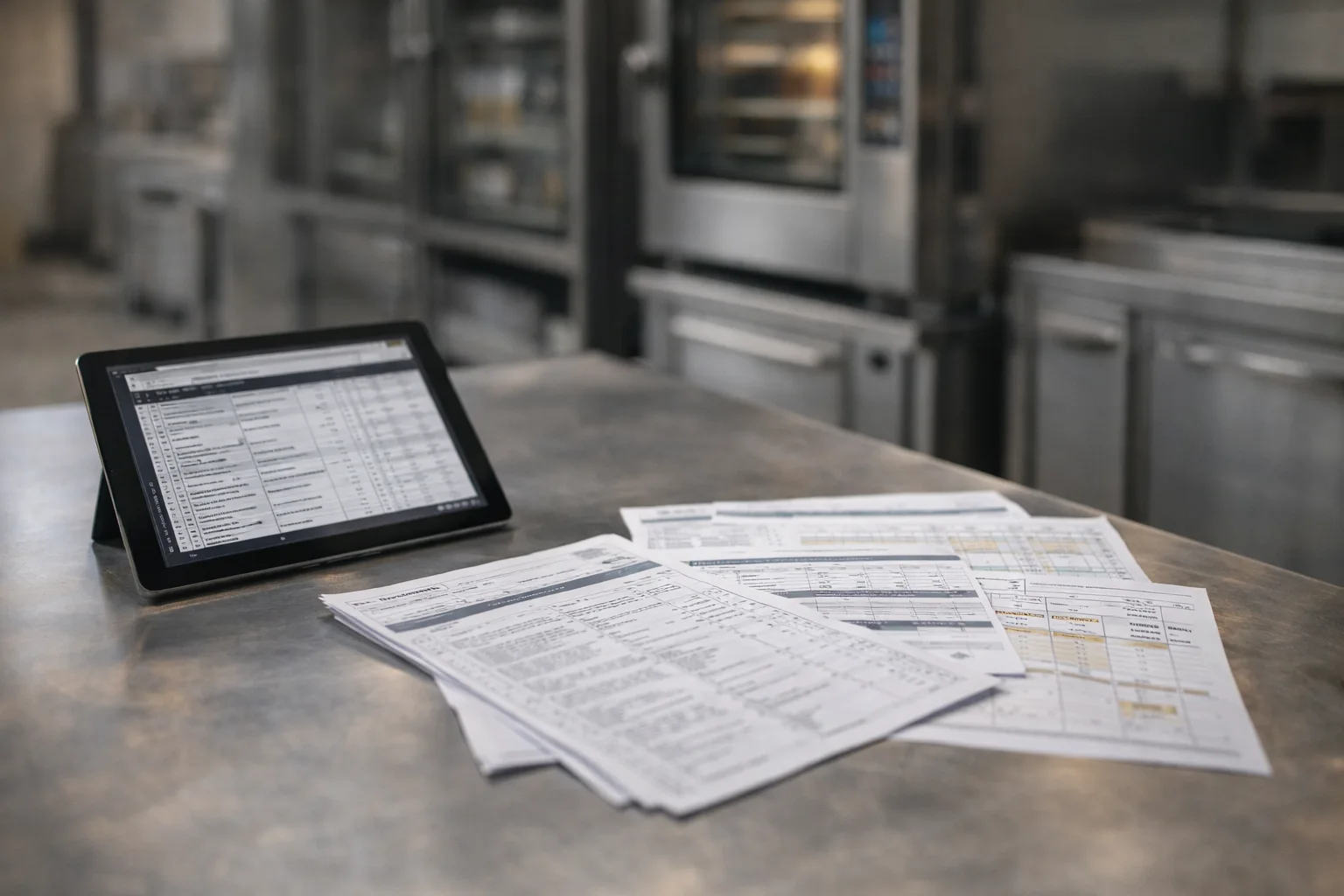
“Good Equipment Alone Does Not Fix a Bad Kitchen.”
In many hotel and resort projects, we hear a familiar sentence from operators: “We bought high-quality equipment, but service is still slow.”
Across turnkey kitchen projects in Africa, the Middle East, and Europe, this problem rarely comes from equipment quality alone. In most cases, the issue is how the equipment was selected in relation to the commercial kitchen design. We seen projects where premium, Turkey-made cooking lines failed to deliver efficiency simply because they were oversized, mismatched, or poorly integrated into the layout and MEP structure.
Choosing the right equipment is not a catalog exercise. It is a project decision that must align with layout logic, workflow, energy infrastructure, and long-term operating strategy.
Why Equipment Selection Must Follow Kitchen Layout
In professional commercial kitchen projects, layout comes first, equipment comes second.
When equipment is selected before layout planning:
- Workflow becomes forced instead of natural
- MEP loads are underestimated or exceeded
- Maintenance access is compromised
- Energy consumption increases unnecessarily
In turnkey projects, equipment selection is validated inside the layout, not outside it. We seen layouts redesigned late in the project because equipment dimensions were fixed too early.
Step 1: Define Production Volume and Service Style
Before selecting any cooking, refrigeration, or washing equipment, the project team must clearly define:
- Expected daily covers and peak loads
- Buffet-driven vs à la carte service
- Banquet frequency and maximum event capacity
- Central production vs outlet-based cooking
For example, a resort kitchen serving 600 buffet covers requires very different equipment logic than a fine dining hotel outlet serving 120 plated meals, even if both appear similar in size.
Step 2: Match Equipment Capacity to Real Demand
One of the most common mistakes is overspecifying equipment capacity.
Bigger equipment does not mean better performance. In fact:
- Oversized ovens waste energy
- Underutilized fryers increase oil degradation
- Large dishwashers create bottlenecks if staffing is limited
We seen in European hotel retrofits that right-sizing equipment reduced energy use by nearly 18–20% within the first year.
Step 3: Gas, Electric, or Induction – Infrastructure Comes First
Equipment selection must respect the project’s energy reality.
Key questions include:
- Is gas supply stable and permitted?
- Can the electrical infrastructure support induction loads?
- Are future sustainability targets defined?
In Middle East hotel projects, gas-heavy kitchens often remain efficient due to infrastructure scale. In Europe, fully electric and induction-ready kitchens are becoming standard due to regulation and energy strategy.
Turkey-built equipment suppliers working factory-direct allow hybrid solutions, combining gas and electric systems without locking the project into a single energy model too early.
Step 4: Equipment Must Support Workflow, Not Block It
Equipment placement affects:
- Staff movement
- Service speed
- Safety and HACCP compliance
Key considerations:
- Hot line sequence must follow menu flow
- Cold prep must stay isolated from cooking heat
- Dishwashing capacity must match service rhythm
In turnkey projects, we physically simulate service flow before finalizing equipment positions. This often reveals conflicts that are invisible on drawings.
Step 5: Maintenance, Service Access, and Lifecycle Cost
Selecting equipment without considering maintenance access leads to long-term problems.
Project teams should evaluate:
- Front vs rear service access
- Availability of spare parts
- Local technical support
- Expected lifecycle cost, not just purchase price
Factory-direct, Turkey-made equipment offers an advantage here: shorter lead times, faster spare parts, and flexible fabrication that adapts to the layout rather than forcing redesign.
Equipment Selection Decision Matrix for Hotel Kitchens
Criteria | Buffet Hotels | Fine Dining | Resorts | Central Production |
Cooking Style | High-volume | Precision | Mixed | Batch-based |
Preferred Energy | Gas / Hybrid | Electric / Induction | Hybrid | Gas / Electric |
Equipment Flexibility | Medium | High | Very High | Critical |
Maintenance Priority | Speed | Precision | Redundancy | Downtime Risk |
Recommended Approach | Turnkey | Custom BOQ | Modular | Factory-Direct |
This matrix helps project teams translate menu concepts into equipment logic, reducing overspecification and long-term operational risk.
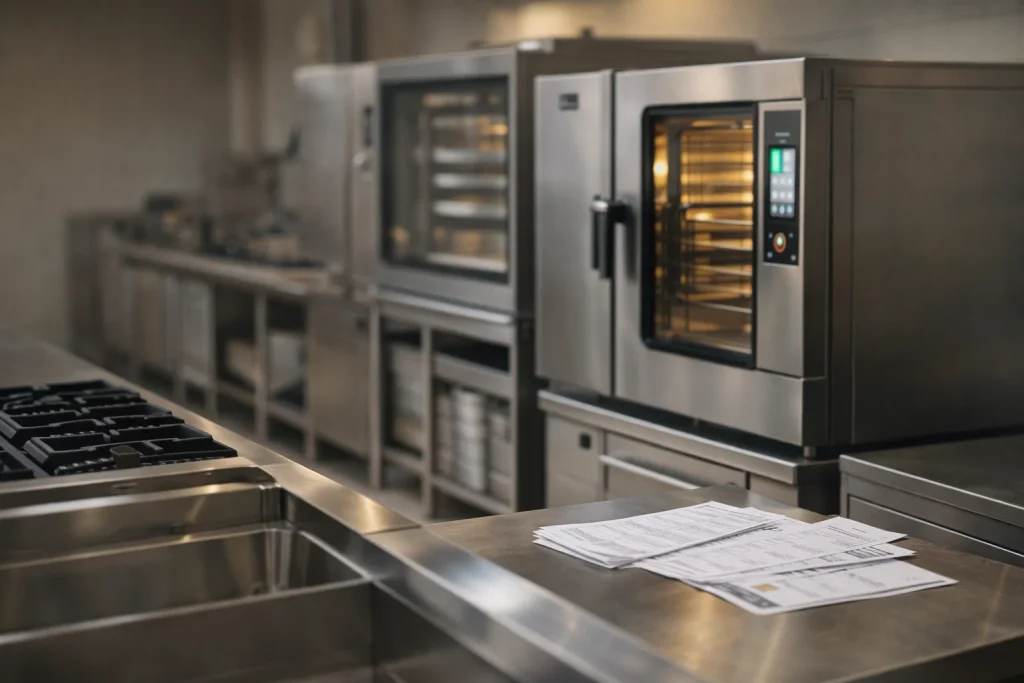
Industry Insight – Global Equipment Selection Trends
According to recent hospitality operations and kitchen engineering trend reports, over 60% of operational inefficiencies in hotel kitchens are linked to mismatched equipment capacity, not equipment quality. In most failed projects, the equipment itself performs correctly — it is simply wrong for the workflow and service volume.
How Procurement Decisions Impact Equipment Performance
Procurement decisions shape kitchen performance long after opening day. Selecting equipment based only on unit price often leads to:
- Higher lifecycle cost due to energy waste
- Limited flexibility during menu changes
- Increased downtime when spare parts are slow
In turnkey projects, procurement managers work alongside designers and engineers to balance BOQ accuracy, operational fit, and lifecycle ROI.
The Hidden Cost of Wrong Equipment Selection
Wrong equipment selection rarely fails immediately. Instead, the cost appears gradually:
- Oversized equipment increases energy consumption without improving output
- Undersized dishwashing creates service bottlenecks
- Incorrect energy choice forces late MEP redesigns
We seen projects where a three-week installation delay caused over $60,000 in lost operational revenue.
Regional Scenarios – Equipment Logic Changes by Geography
Africa: Reliability Over Complexity
Projects prioritize:
- Simple, robust equipment
- Voltage-tolerant systems
- Easy-to-service designs
Middle East: Peak Load Performance
Projects demand:
- High-capacity cooking lines
- Heavy-duty dishwashing
- Strong ventilation and heat management
Europe: Energy and Regulation Driven
Projects focus on:
- Electric and induction systems
- Low water consumption
- Noise and emission limits
We seen identical equipment lists fail when copied across regions without adaptation.
The Made in Turkey Advantage in Equipment Selection
Turkey-built commercial kitchen equipment provides:
- Factory-direct pricing
- Custom dimensions aligned with layout
- Faster production and delivery
- Strong balance between performance and cost
In turnkey projects, this flexibility allows procurement managers and consultants to finalize equipment lists without compromising layout integrity.
FAQ – Equipment Selection for Commercial Kitchen Projects
How do you select the right equipment for a hotel kitchen?
Equipment should be selected based on menu volume, service style, workflow, and MEP capacity — not brand preference or catalog size.
Should equipment selection come before or after kitchen layout?
In professional and turnkey projects, layout planning always comes first. Equipment selection is the result, not the starting point.
Gas vs induction – which is better for hotel kitchens?
The right choice depends on infrastructure, energy policy, and service intensity. Many projects now use hybrid solutions.
How does equipment choice affect operating costs?
Correctly sized equipment can reduce energy and maintenance costs by 15–20% over the lifecycle of a hotel kitchen.
Why do turnkey projects reduce equipment selection mistakes?
Because layout, MEP, procurement, and installation are coordinated as one system.