Civil & MEP Contractors for Commercial Kitchens
Successful commercial kitchen projects rely on accurate execution, coordination, and technical expertise on site. Civil & MEP Contractors for Commercial Kitchens play a vital role in delivering compliant structural works, utilities, and building services that support efficient kitchen operations. Their involvement ensures that civil construction, service routing, ventilation systems, drainage, and electrical infrastructure are properly integrated, reducing rework, delays, and long-term operational risks.
This section focuses on practical, on-site considerations related to contractor execution in foodservice environments. Topics include planning and sequencing of commercial kitchen civil works, coordination of kitchen building services, service routing, load calculations, ventilation integration, drainage planning, and site-specific challenges. Effective integrated building services coordination supports smoother installation, testing, and commissioning while helping project stakeholders reduce rework and control costs. A well-structured approach to MEP services for commercial kitchens further strengthens overall project outcomes.
Frequently Asked Questions
What is integrated building services coordination?
Integrated building services coordination refers to the structured alignment of civil works, mechanical, electrical, and plumbing systems so that all building services function together efficiently within a commercial kitchen environment.
Why is building services coordination important in commercial kitchens?
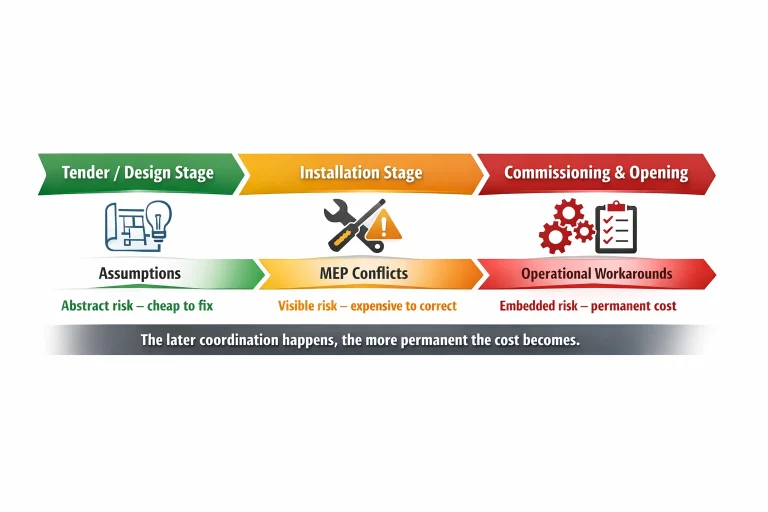
Proper coordination ensures that ventilation, drainage, power, water, and gas systems are installed without conflicts, reducing rework, delays, and long-term operational issues in high-demand kitchen environments.
How does integrated MEP coordination support kitchen project delivery?
Integrated MEP coordination helps align equipment requirements with service routing, load calculations, and compliance needs, allowing smoother installation, testing, and commissioning of commercial kitchen facilities.
What problems occur without coordinated building services planning?
Without coordinated planning, projects often face clashes between services, inefficient layouts, access issues for maintenance, and unexpected cost increases during construction or operation.
Who is responsible for building services integration on kitchen projects?
Responsibility typically lies with experienced kitchen civil and MEP contractors working closely with consultants, designers, and project managers to manage multidisciplinary service coordination.
Is building services coordination different for commercial kitchens?
Yes. Commercial kitchens require higher levels of coordination due to heavy equipment loads, ventilation demands, fire safety requirements, hygiene standards, and continuous operational use.