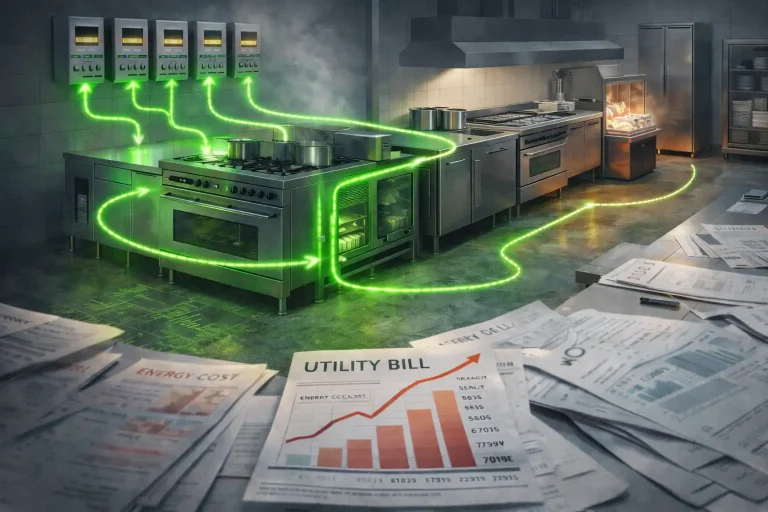
When Budgets Look Right on Paper — and Collapse on Site
The budget was approved. The scope was defined. The numbers looked controlled.
Then procurement started, installation followed, and costs began to drift.
In commercial kitchen projects, budget overruns rarely come from one big mistake. They come from dozens of small decisions that look harmless in isolation — until they compound.
Across turnkey commercial kitchen projects delivered for hotels, resorts, and large catering operations, the same pattern repeats: the budget fails not because equipment prices were wrong, but because cost behavior was never engineered.
Budget Assumption vs Project Reality
Design assumption: If equipment, layout, and MEP are approved, the budget is locked.
Project reality: Costs continue to evolve as soon as installation meets reality.
Approved BOQs confirm what is included. They do not confirm:
- How many times work will be repeated
- How many revisions will occur under pressure
- How much re-coordination will be needed on site
- How delays convert into indirect cost
Budgets fail when projects move from static planning into dynamic execution.
Five Structural Reasons Kitchen Projects Go Over Budget
1️⃣ Design Decisions Made Without Installation Logic
Many budgets are built on drawings that are technically correct but installation-blind.
When installation starts:
- Equipment clashes with services
- Access zones disappear
- Sequencing assumptions collapse
Each conflict triggers:
- Rework
- Additional labor
- Extended site presence
Cost impact: Small drawing gaps turn into repeated site costs.
2️⃣ Late Changes During Installation Phase
Design changes are cheap on paper and expensive on site.
Common late-stage changes:
- Equipment model substitutions
- Layout adjustments to “make it fit”
- MEP rerouting after installation
These changes rarely affect one trade only.
Cost impact: A single change propagates across equipment, labor, MEP, and commissioning.
3️⃣ Fragmented Responsibility Creates Cost Leakage
In fragmented delivery models:
- Designers protect drawings
- Suppliers protect scope
- Contractors protect variations
No one protects the total cost.
When coordination gaps appear, budget control dissolves into disputes.
Cost impact: Variations replace optimization.
4️⃣ Underestimated Commissioning & Testing Cost
Budgets often assume commissioning is short and predictable.
In reality:
- Multiple retests occur
- Utilities require stabilization
- Staff must be re-scheduled
Each extra day on site increases:
- Labor cost
- Accommodation
- Supervision
- Opportunity cost
Cost impact: Time overruns quietly inflate total spend.
5️⃣ Ignoring Post-Opening Fixes in Budget Planning
Many kitchen issues surface only after opening:
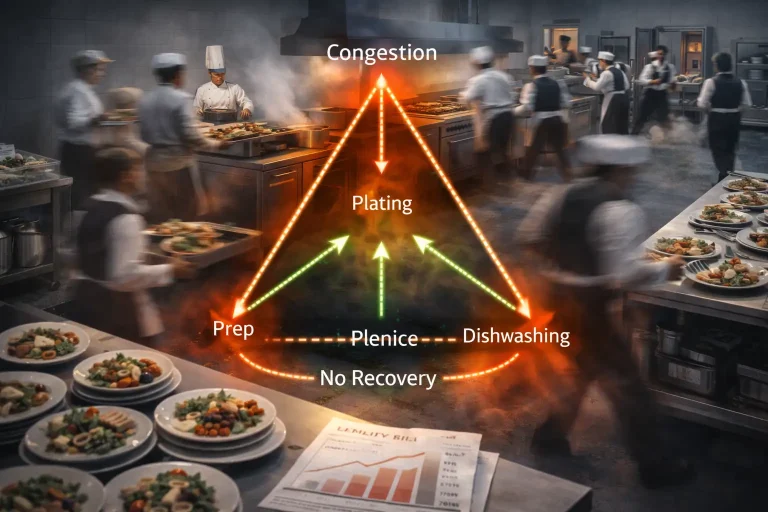
- Workflow bottlenecks
- Electrical recovery problems
- Drainage and ventilation corrections
Fixing them post-opening costs more — always.
Cost impact: Deferred corrections multiply cost by design.
Cost Multiplier by Project Phase
Project Phase | Relative Cost of Change |
Concept & Layout | 1× |
Detailed Design | 2–3× |
Installation | 4–6× |
Commissioning | 6–8× |
Post-Opening | 8–12× |
Key insight: Budget overruns are phase-driven, not mistake-driven.
Why Approved Budgets Still Fail
Approved budgets validate scope, not behavior.
They do not account for:
- Human adaptation under pressure
- Sequencing conflicts
- Recovery delays
- Repetition of small inefficiencies
When behavior is ignored, cost becomes unpredictable.
Turnkey Perspective — How Budget Control Is Actually Achieved
Turnkey is not about doing everything under one contract.
It is about:
- Owning sequencing
- Aligning layout, MEP, and equipment
- Controlling changes before they reach site
- Absorbing coordination risk instead of exporting it
In turnkey kitchen projects delivered with Turkey-built systems and centralized engineering, cost stability improves because behavior is designed, not assumed.
What a Budget-Stable Kitchen Project Looks Like
Projects that stay on budget share clear traits:
- Installation logic validated during design
- Change control frozen before site mobilization
- Commissioning treated as a cost driver, not a formality
- Post-opening risks anticipated, not ignored
The equipment may be similar. The difference is how the project behaves.
Hidden Costs That Push Commercial Kitchen Projects Over Budget
Most commercial kitchen projects do not go over budget because of wrong equipment or poor suppliers. They go over budget because hidden costs surface too late to control them.
The most common hidden cost drivers in hotel, resort, and banquet kitchens include:
- Design changes introduced during installation, not during layout phase
- MEP upgrades required after equipment is already on site
- Rework caused by coordination gaps between trades
- Temporary fixes implemented to protect opening dates
- Post-opening “operational improvements” that are actually correction costs
These costs rarely appear in the original BOQ. They emerge after approvals, when time pressure removes cheaper options.
Key insight: Hidden costs are not surprises — they are delayed decisions showing up as invoices.

How Design Changes Multiply Cost by Project Phase
Project Phase | Relative Cost Impact | Why It Escalates |
Layout & concept | ×1 | Changes affect drawings only |
Installation phase | ×4–6 | Rework, labor, sequencing impact |
Post-opening | ×10–15 | Downtime, operational loss, reputation |
A €1,000 layout change can easily become a €10,000 correction after opening — not because the change is bigger, but because everything around it is already locked.
Key insight: Approved drawings reduce design risk. They do not reduce timing risk.
Why Commercial Kitchen Projects Go Over Budget (Simple Explanation)
Commercial kitchen projects go over budget because decisions are made when flexibility is gone.
Early decisions are cheap but uncomfortable. Late decisions are comfortable but expensive.
Once installation starts:
- Every change affects multiple systems
- Every delay triggers parallel costs
- Every fix consumes schedule buffer
This is why budget overruns are rarely technical failures. They are decision-timing failures.
What Owners Usually Realize Too Late
By the time overruns become visible, owners often realize:
- The equipment was correct
- The consultants followed standards
- The contractors delivered their scope
Yet the budget still collapsed.
Because no one owned:
- How changes would be handled after approval
- How workflow realities would affect layout decisions
- How installation sequencing would multiply cost
Budget overruns feel operational. Their root cause is structural.
How to Prevent Budget Overruns in Commercial Kitchen Projects
Preventing budget overruns is not about tighter control — it is about earlier validation.
Effective prevention steps include:
- Validate layout against real workflow before freezing drawings
- Lock BOQ only after installation sequencing is reviewed
- Simulate peak load behavior before final MEP approval
- Assign one party responsible for post-approval changes
Key insight: Budget control is not a finance task. It is a design and coordination task.
Why This Matters More in Resort & Banquet Kitchens
Resort and banquet kitchens amplify cost overruns because:
- Peak load drives last-minute changes
- Multiple services overlap under pressure
- Any delay impacts guest experience directly
In these environments, small design adjustments during installation often turn into overtime labor, temporary fixes, and permanent cost increases.
This is why turnkey, project-based kitchen delivery models protect budgets by protecting timing.
Final Integrated Insight
Commercial kitchen projects do not go over budget because of bad equipment choices.
They go over budget because design, workflow, and installation decisions are disconnected from timing and ownership.
The later a decision is made, the more expensive it becomes — regardless of how small it looks on paper.
FAQ – Kitchen Project Budget Overruns
Why do kitchen projects exceed budgets even with approved BOQs?
Because BOQs define items, not execution behavior.
Are equipment changes the main cause of overruns?
No. Sequencing and rework usually cost more than equipment.
Can turnkey delivery really control budget better?
Yes — when it controls behavior, not just scope.
When should cost risk be addressed?
During layout and workflow validation, before installation.
How can owners protect their kitchen investment?
By requesting project-level cost behavior reviews, not just price checks.