Why Kitchens Miss Their Opening Dates Even When Everything Looks Ready
The equipment arrived. Installation was completed. The opening date was announced.
Then commissioning started — and the calendar stopped.
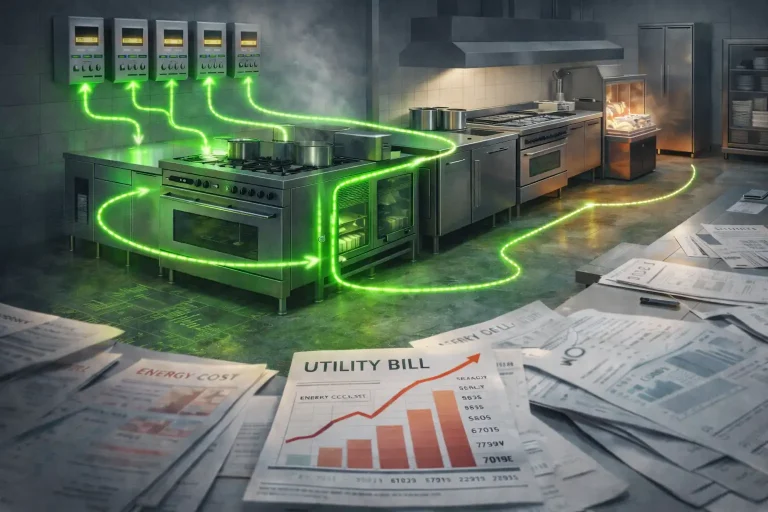
In generic hotel kitchen projects, opening delays rarely come from missing equipment or failed inspections. Most delays appear after everything looks finished, when commissioning exposes conflicts that were invisible during design, installation, and individual testing.
Kitchens do not open late because something is broken. They open late because commissioning reveals what was never tested as a system.
What Commissioning Is Assumed To Be
In many projects, commissioning is treated as:
- A checklist
- Individual equipment testing
- A formal step before handover
- Proof that installation is complete
Once machines turn on and alarms stay silent, teams assume the kitchen is ready to operate.
This assumption is where opening delays are born.
What Commissioning Actually Is
In reality, commissioning is the first moment the kitchen is asked to behave as a system.
It is the first time:
- Equipment runs simultaneously
- Ventilation reacts to real heat loads
- Power demand overlaps instead of cycling
- Water, drainage, and recovery loads stack
- Workflow timing meets physical limits
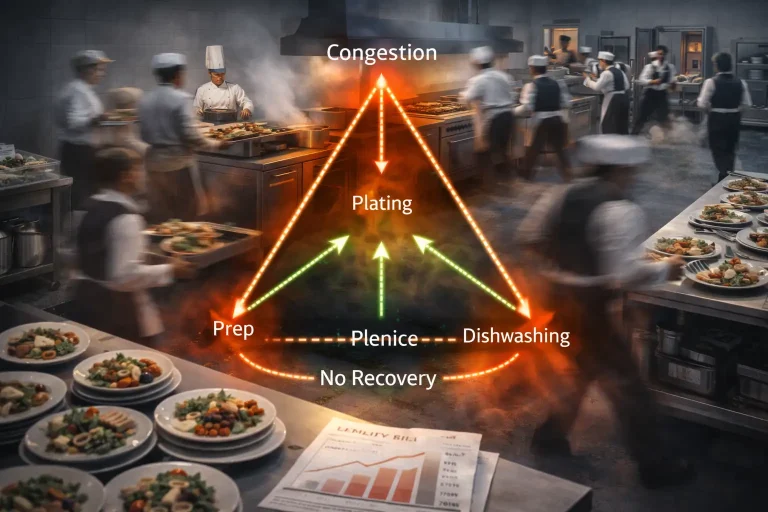
Commissioning is not a technical formality. It is a schedule stress test.
Five Commissioning Errors That Delay Kitchen Openings
Below are the most common commissioning mistakes that push openings from days into weeks — even when all equipment is correct.
1️⃣ Commissioning Individual Equipment, Not the System
Each machine is tested alone:
- Combi oven heats correctly
- Hood extracts properly
- Electrical panels remain stable
Then everything runs together.
What happens:
- Power demand peaks simultaneously
- Ventilation response lags
- Control systems throttle performance
Result: Nothing fails — but service speed collapses. Commissioning pauses while teams search for a problem that only appears under simultaneity.
2️⃣ Ignoring Recovery & Cleaning Cycles
Commissioning often focuses on service-time operation. Recovery is assumed to be safe.
Reality:
- Cleaning cycles start together
- Dishwashers heat tanks
- Hot water systems recharge
- Ventilation shifts modes
Result: Electrical trips, drainage overloads, or system resets occur after service — delaying the next day’s readiness and pushing opening dates.
3️⃣ Testing Without Real Load Simulation
Many commissioning programs test at:
- Reduced batch sizes
- Short durations
- Partial staffing
Reality: Opening day demands 80–95% simultaneity.
Result:
- Bottlenecks appear only during full-load testing
- Holding areas overload
- Dispatch timing breaks down
Fixes discovered here require rework — and time.
4️⃣ Discovering Installation Conflicts During Commissioning
Commissioning often reveals:
- Drain slopes that fail under flow
- Access points blocked by installed equipment
- Clearance issues affecting maintenance or safety
These are not design errors. They are sequencing errors discovered too late.
Result: Minor civil or installation corrections extend commissioning by days — sometimes weeks.
5️⃣ Scheduling Commissioning Too Late in the Project Timeline
In compressed projects, commissioning is pushed to the very end. There is no buffer.
When issues appear:
- Opening dates are already announced
- Staff is scheduled
- Marketing is live
Result: Every unresolved commissioning issue becomes a calendar problem, not a technical one.
What Commissioning Delays Really Cost
When kitchen openings are delayed, the impact extends beyond the site:
- Lost opening revenue
- Staff standby and rescheduling costs
- Reputational risk with guests and operators
- Temporary fixes becoming permanent compromises
A one-week delay rarely stays one week.
Why Commissioning Errors Keep Repeating
Because commissioning often sits between scopes.
- Designers finish their role
- Contractors complete installation
- Suppliers close delivery
- Operations has not fully taken ownership
No single party owns how the kitchen behaves during its first real stress.
Commissioning becomes everyone’s responsibility — and no one’s accountability.
Turnkey Perspective — Why Commissioning Must Be Owned
Commissioning is not the end of a project. It is the transition from project logic to operational reality.
A turnkey mindset treats commissioning as:
- System-level validation
- Calendar protection
- Opening-day rehearsal
Not as a checkbox.

What Proper Commissioning Actually Looks Like
Successful kitchen commissioning includes:
- System-level testing under peak behavior — not individual equipment approval
- Recovery and cleaning cycles tested together — not assumed
- Opening-day scenarios rehearsed — not simulated
When these steps are completed early enough, openings stabilize.
Days vs Weeks – How Commissioning Delays Actually Grow
Commissioning Issue | Typical Initial Delay | Realistic Escalation | Why It Expands |
Missing system-level testing | 1–2 days | 5–7 days | Failures appear only under full load, forcing retests |
Incomplete MEP coordination | 2–3 days | 1–2 weeks | One fix triggers rework in other systems |
Late equipment handover | 1 day | 4–6 days | Downstream tests cannot start without all equipment |
Utility instability (power/water/gas) | 2 days | 7–10 days | Repeated shutdowns prevent stable commissioning |
Documentation & approval gaps | 1–2 days | 5–7 days | Authorities require retesting after changes |
Key insight: Commissioning delays rarely stay small. In hotel kitchens, every missed day compounds into lost weeks once opening dates, staffing, and marketing are already locked.
Final Insight
Kitchens do not open late because equipment fails.
They open late because commissioning exposes conflicts that were never allowed time to surface.
Commissioning does not delay projects. Late commissioning does.
Commissioning Timeline Reality – Why Days Turn Into Weeks
In hotel kitchen projects, commissioning is often scheduled as a short, final activity — two or three days placed just before opening. On paper, this looks efficient. In reality, it is structurally risky.
Commissioning rarely fails because of one major fault. It fails because multiple small issues surface sequentially, each requiring correction, retesting, and coordination. What was planned as a 2‑day activity quickly stretches into a multi‑week delay.
Typical timeline breakdown:
- Day 1–2 (Planned): Individual equipment checks, basic system start‑up
- Day 3–4: First system‑level conflicts appear (power, ventilation, drainage)
- Day 5–7: Corrections trigger re‑inspection and partial retesting
- Week 2: Utility stability and approval cycles extend the delay
Once commissioning issues appear, the calendar accelerates against the project team:
- Opening dates are already announced
- Staff rosters are fixed
- Marketing and sales are live
At this stage, every technical issue becomes a schedule crisis, not an engineering task.
Key insight: Commissioning delays are rarely caused by technical complexity. They are caused by unrealistic timeline assumptions that leave no buffer for system behavior to reveal itself.
Commissioning Without Real Load Simulation – The Hidden Opening Risk
One of the most common commissioning mistakes in hotel kitchens is testing systems without real operational load.
During commissioning, kitchens are often tested with:
- Reduced batch sizes
- Partial staffing
- Short operating durations
- Sequential equipment activation
This creates a false sense of readiness.
On opening day, the kitchen experiences conditions that were never tested:
- Simultaneous cooking cycles at near‑maximum output
- Overlapping ventilation, power, and water demand
- No recovery time between batches
- Staff operating under real pressure
The result is predictable:
- Equipment works individually but destabilizes as a system
- Electrical and ventilation limits appear only under simultaneity
- Bottlenecks form where drawings showed none
These failures do not appear during commissioning reports. They appear during the first real service — when correction costs are highest and schedule flexibility is gone.
Key insight: Commissioning without real load simulation does not validate readiness. It postpones failure to the most expensive moment: opening.
FAQ – Commissioning & Kitchen Opening Delays
Why do kitchens fail commissioning despite correct equipment?
Because commissioning tests behavior, not specifications.
Can commissioning delays be fixed without postponing opening?
Only if issues are discovered early enough to absorb correction time.
Who should own commissioning in hotel kitchen projects?
The party responsible for aligning equipment, MEP, workflow, and opening performance.
When should commissioning realistically start?
Before the opening date is announced — not after it is marketed.