“The Kitchen Was Open. The Problems Just Started.”
In many hotel and resort projects, the real performance test of a commercial kitchen does not happen at commissioning. It happens after opening, when banquet service overlaps with à la carte operations, staffing peaks, and real pressure replaces drawings and assumptions.
Across post-opening recovery projects in Africa, the Middle East, and Europe, a recurring pattern appears. Kitchens that looked technically correct on paper failed under live service conditions — not because of equipment quality or staff competence, but because workflow logic was never validated under real operational load.
This article presents anonymous, region-based case studies and explains — in clear, practical terms — why kitchens fail after opening, what it really costs, and how workflow can be corrected when handled as a turnkey, system-level intervention, not a collection of isolated fixes.
Why Commercial Kitchens Fail After Opening
Most post-opening failures are not design errors. They are assumption errors.
Typical assumptions that collapse after opening:
- Service peaks will be evenly distributed across outlets
- Staff movement will naturally adapt to layout constraints
- Equipment capacity alone will absorb demand spikes
- MEP systems will self-balance once operations stabilize
In reality, once a kitchen goes live:
- Circulation conflicts multiply
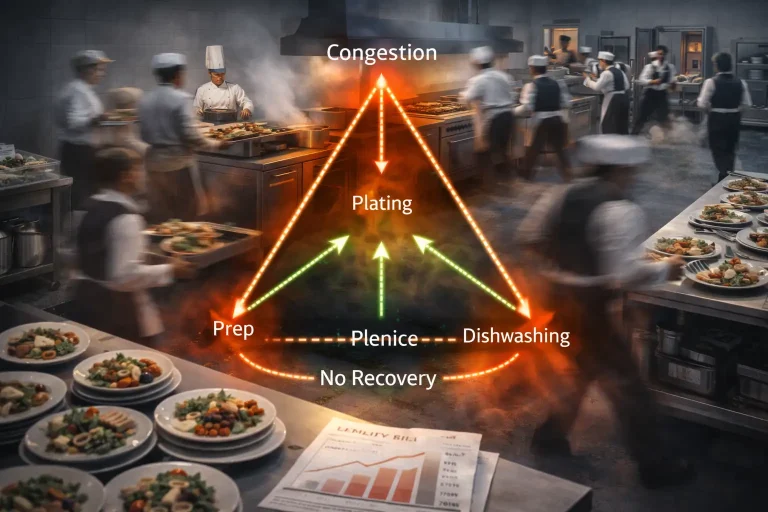
- Holding and staging areas become bottlenecks
- Clean and dirty flows start intersecting
- Heat, noise, and pressure directly reduce staff efficiency
At this stage, fixing problems is always possible — but never cheap.
Case Study 1 – Africa | Central Production & Banquet Kitchen
This case highlights how banquet peak loads expose zoning and staging weaknesses that remain invisible during commissioning and low-volume test runs.
What Happened After Opening
A large hotel operated a central production kitchen supporting daily banquets. Within the first weeks, service delays appeared during plated events, despite sufficient cooking equipment and trained staff.
What We Found (Root Cause)
- BOH zoning logic copied from à la carte kitchens
- No dedicated staging and holding zones for banquet peaks
- Long prep-to-cook travel distances under pressure
These issues were invisible on drawings but obvious during live service.
What Was Corrected
- BOH circulation re-zoned without adding new equipment
- Linear prep → cook → hold sequence introduced
- Holding repositioned directly adjacent to dispatch
Result (Measured Impact)
- 18% reduction in internal staff movement
- Faster banquet plating without CAPEX increase
- Improved service predictability during peak events
👉 This case proved that workflow correction often delivers more value than equipment upgrades.
Case Study 2 – Middle East | Resort Hot Kitchen
This recovery shows how thermal imbalance and ventilation logic directly affect staff endurance, service rhythm, and post-opening performance in resort kitchens.
What Happened After Opening
A high-end resort reported staff fatigue, heat complaints, and inconsistent service speed during peak hours — despite premium equipment installation.
What We Found (Root Cause)
- Gas-heavy cooking concentrated in a single zone
- Ventilation imbalance pulling heat into prep areas
- No separation between bulk production and finishing
The kitchen worked — but only at the cost of staff endurance.
What Was Corrected
- Introduced a hybrid gas + induction cooking strategy
- Rebalanced hood exhaust and make-up air volumes
- Separated bulk cooking from plating stations
Result (Measured Impact)
- Noticeable reduction in ambient kitchen temperature
- More stable service rhythm under peak load
- Improved staff comfort without layout expansion
👉 Here, workflow recovery was inseparable from MEP recalibration.
Case Study 3 – Europe | Hotel Kitchen Retrofit
This example demonstrates how retrofit projects fail when average-load assumptions ignore peak service reality, especially in dishwashing and clean–dirty separation.
What Happened After Opening
A renovated hotel kitchen struggled during breakfast and banquet overlap. Dishwashing backlogs appeared, and hygiene risks were flagged.
What We Found (Root Cause)
- Dishwasher capacity sized for average load, not peaks
- Dirty return intersecting with service dispatch
- No buffer zone for trolley accumulation
What Was Corrected
- Dishwashing flow re-sequenced
- Physical separation between clean and dirty circulation
- Machine cycle logic adjusted instead of replacement
Result (Measured Impact)
- Faster service ware turnaround
- Improved hygiene compliance
- No disruption to guest-facing operations
👉 Retrofit kitchens fail fastest when workflow reality is underestimated.

Why Fixing After Opening Is So Expensive
Typical Cost Impact (Observed Ranges)
Issue Type | Typical Impact |
1-week service delay | $20k–40k revenue loss |
Post-opening rework | 3–5× cost vs design-stage fix |
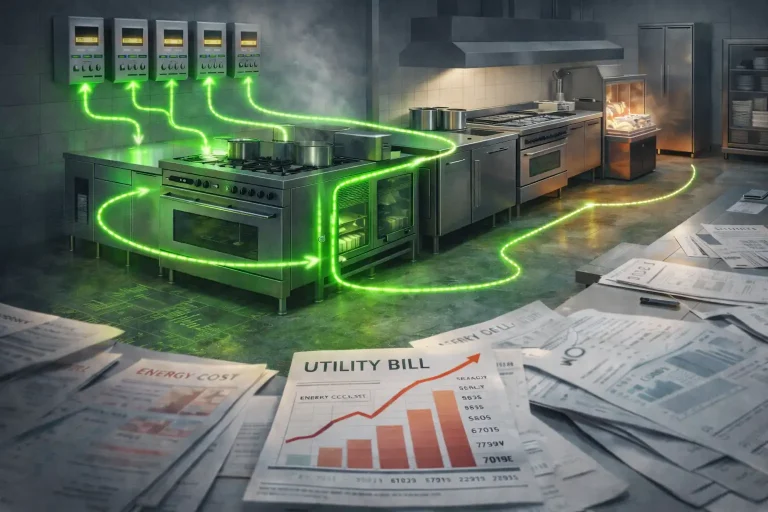
Staff inefficiency | +15–25% labor cost |
Once a kitchen is operational, every correction affects service continuity, staffing, and guest experience. This is why preventive workflow validation always beats reactive correction.
Turnkey Recovery vs “Fix-It-Later” Approach
Fragmented Fixing Model
- Problems solved one by one
- Responsibility split across suppliers
- Short-term relief, long-term inefficiency
Turnkey Recovery Model
- Workflow, layout, MEP treated as one system
- Root causes addressed, not symptoms
- Single accountability for performance recovery
👉 In post-opening scenarios, fragmented fixes rarely solve systemic problems.
48-Hour Post-Opening Workflow Diagnostic Framework
In recovery projects, the fastest improvements follow a clear method:
- Observe the kitchen during peak service
- Map real staff movement paths
- Identify waiting, crossing, and backtracking
- Validate MEP behavior under full load
- Simulate corrected flow before physical change
Most critical workflow failures become visible within 48 hours when analyzed correctly.
Why These Fixes Work Best in Turnkey Projects
Workflow recovery touches:
- Layout logic
- Equipment positioning
- MEP balance
- Staff circulation
Project-based kitchen contractors correct these as a system, not as isolated tasks. This is why turnkey teams resolve post-opening failures faster — and with fewer compromises.
FAQ – Fixing Workflow Failures After Opening
Can workflow issues really appear only after opening?
Yes. Many problems surface only under real service pressure.
Is equipment replacement usually required?
No. Most fixes involve zoning, sequencing, and MEP adjustment.
Why are banquet kitchens more vulnerable?
Because peak loads magnify small design errors.
Can these fixes be done without shutting down service?
Often yes, if planned correctly.
Why do turnkey teams fix problems faster?
Because responsibility is unified and root causes are addressed.