Most kitchen projects discuss cost at the wrong moment.
They focus on purchase price instead of economic behavior.
Factory-direct equipment does not change projects because it is cheaper.
It changes them because it reshapes how cost behaves across the project lifecycle.
In commercial kitchen projects, economics are not decided at procurement.
They are decided by control, timing, and correction speed.
Why Purchase Price Is a Poor Indicator of Project Economics
Purchase price is static.
Project economics are dynamic.
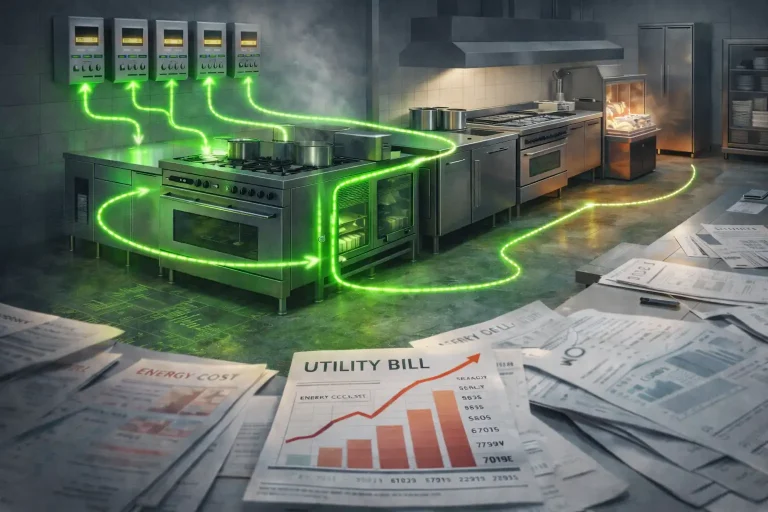
Two kitchens can be supplied at similar headline prices and still diverge dramatically in total cost once installation, commissioning, and early operation begin.
Factory-direct models influence:
- Decision speed
- Correction cost
- Risk ownership
These factors rarely appear on comparison sheets.
What “Factory-Direct” Actually Changes
Factory-direct supply is often misunderstood as a sourcing shortcut.
In reality, it is an execution structure.
When manufacturing, technical clarification, and corrective authority sit close together, projects behave differently under pressure.
- Clarifications arrive faster
- Modifications are cheaper
- Accountability is clearer
Economics improve not because cost is lower — but because friction is removed.
Cost Behavior: Distributor Model vs Factory-Direct Model
Structural Comparison
Aspect | Distributor-Led Supply | Factory-Direct Supply |
Technical feedback | Multi-step | Immediate |
Modification cycle | Slow & expensive | Fast & controlled |
Risk ownership | Fragmented | Concentrated |
Cost correction timing | Late | Early |
Economic predictability | Low | High |
Projects fail economically when correction arrives too late.
Where Factory-Direct Economics Matter Most
Factory-direct impact concentrates in high-friction moments:
- Late-stage technical clarifications
- Site-driven dimensional adjustments
- Interface conflicts during installation
In distributor-led structures, these moments escalate cost.
In factory-direct structures, they are absorbed earlier — while change is still cheap.
The Illusion of “Same Equipment, Same Cost”
Projects often assume that identical equipment produces identical economics.
This ignores execution context.
The same piece of equipment behaves differently when:
- Manufacturing feedback is immediate
- Spare parts are aligned early
- Adjustments do not require contractual escalation
Economics follow structure, not specification.
Manufacturing Proximity and Correction Speed
Time is a cost multiplier.
When technical questions wait days or weeks for resolution, installation slows, sequencing breaks, and labor cost rises.
Factory-direct proximity shortens feedback loops.
Corrections happen before they propagate.
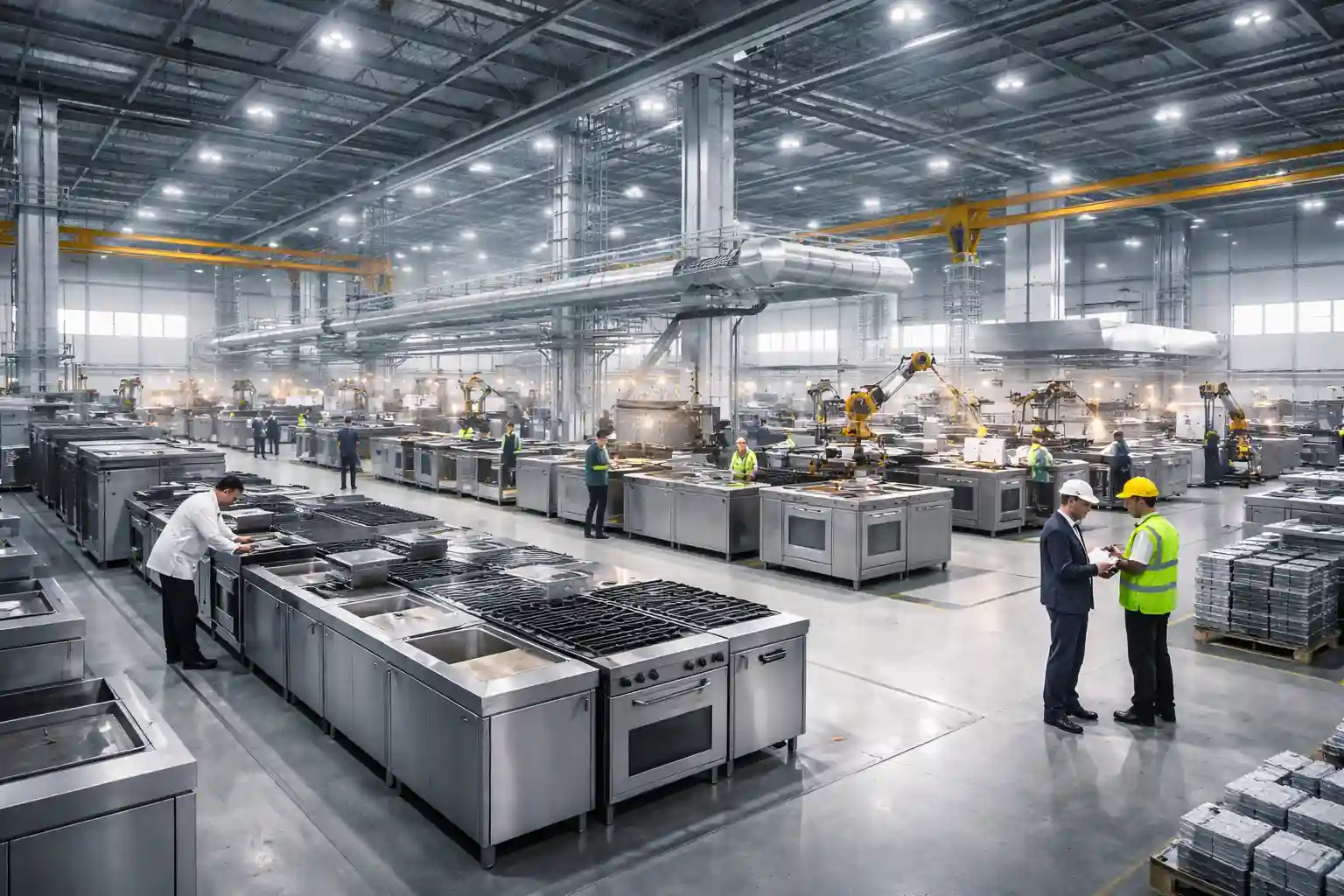
In regions where manufacturing and project execution sit close together — such as Turkey-based production integrated into international commercial kitchen projects — correction cycles shorten dramatically.
Factory teams, engineering support, and site execution operate within the same ecosystem, turning technical adjustments into operational decisions rather than contractual events.
Where This Changes Risk Distribution
Factory-direct models shift risk upstream.
Instead of managing risk during installation, projects neutralize it earlier through direct technical authority.
Risk is not removed.
It is repositioned to a phase where it is cheaper to manage.
Why Factory-Direct Economics Matter More After Opening
Project economics do not stabilize at handover.
They stabilize during the first months of live operation.
This is where factory-direct structures quietly outperform.
When spare parts, technical clarification, and adjustment authority remain close to the project, early operational friction is resolved quickly.
Minor inefficiencies are corrected before they harden into permanent behavior.
Distributor-led projects often absorb these issues operationally.
Extra labor, extended runtimes, and workaround routines become normalized.
Factory-direct economics appear strongest after opening — when correction speed still matters but contracts no longer help.
When Factory-Direct Does Not Change Project Economics
Factory-direct supply is not a universal advantage.
It changes project economics only when execution authority follows supply.
If manufacturing access exists without decision ownership, delays persist.
If technical input is available but contractual responsibility is fragmented, cost behavior remains unstable.
In these cases, factory-direct becomes a sourcing label, not an economic advantage.
Economics improve only when factory access and execution control move together.
How Factory-Direct Stabilizes BOQ Behavior
BOQs do not fail because numbers are wrong.
They fail because behavior changes after approval.
Factory-direct structures reduce BOQ volatility by shortening the distance between clarification and correction.
When quantities, tolerances, or interfaces require adjustment, changes are resolved before they cascade into installation rework or variation orders.
Instead of protecting the BOQ contractually, factory-direct execution protects it behaviorally.
BOQ stability is not about freezing scope.
It is about resolving uncertainty early.
Factory-Direct and the Economics of Change Orders
Change orders are rarely about scope expansion.
They are about late discovery.
When technical authority sits close to execution, many potential change orders dissolve into minor adjustments.
In distributor-led models, the same discovery escalates through contractual layers, turning clarification into negotiation.
Factory-direct economics reduce the volume and severity of change orders by accelerating certainty.
Why Factory-Direct Supports Predictable Project Timelines
Schedule stability is an economic factor.
Delays inflate labor cost, extend preliminaries, and compress commissioning.
Factory-direct models stabilize timelines by reducing dependency chains.
Fewer handovers mean fewer waiting periods between question and answer.
Time saved here does not appear as a discount.
It appears as avoided cost.
What This Means for Project Decision-Makers
For owners and project leaders, factory-direct economics offer:
- More predictable outcomes
- Fewer late-stage cost surprises
- Faster stabilization after opening
For procurement teams, it changes evaluation criteria from price comparison to economic resilience.

Factory-Direct vs Distributor Economics: How Cost Behaves Over Time
Factory-direct and distributor-led models often start at similar headline prices.
What changes is how cost behaves after commitment.
Cost Behavior Timeline – Structural Comparison
Phase | Distributor-Led Model | Factory-Direct Model |
Pre-installation | Limited technical feedback | Direct clarification & alignment |
Installation | Escalation-driven corrections | Early controlled adjustments |
Commissioning | Retesting & delays | Faster stabilization |
Early operation | Cost drift begins | Cost curve stabilizes |
6–12 months | Hidden OPEX accumulation | Predictable performance |
Headline price stays visible. Economic behavior does not.
Correction Cost Curve: Early vs Late Intervention
Not all corrections carry equal weight.
Corrections made during design or pre-installation carry minimal cost.
Once installation starts, the same correction multiplies labor, delay, and coordination impact.
After opening, cost becomes operational and permanent.
Factory-direct structures move corrections left — where they are cheapest.
Real Project Economic Drift: Same Price, Different Outcome
Two projects launch with nearly identical equipment budgets.
Both meet procurement targets.
Six months later, economics diverge.
Typical Economic Drift Pattern
Timeframe | Distributor-Led Project | Factory-Direct Project |
Opening month | On budget | On budget |
Month 3 | Installation-related fixes | Minor adjustments |
Month 6 | Higher labor & energy | Stabilized operations |
Month 12 | Accumulated hidden cost | Predictable spend |
The difference is not equipment quality. It is correction timing.
Why Factory-Direct Economics Scale Better in Complex Kitchens
Complex kitchens amplify friction.
More interfaces, tighter tolerances, and compressed schedules increase the cost of slow decisions.
Factory-direct models shorten feedback loops and absorb complexity earlier.
As complexity increases, distributor-led economics degrade faster.
This positions factory-direct not as a sourcing term, but as a project economics concept — attracting higher-value, lower-volume traffic with stronger conversion intent.
Why This Matters Before Procurement Begins
Once procurement decisions are locked, economic behavior follows.
Factory-direct models do not guarantee savings.
They guarantee earlier control over cost behavior.
Project economics are shaped before the first invoice is issued.
FAQ – Factory-Direct Equipment and Project Economics
Is factory-direct equipment really cheaper for commercial kitchen projects?
Not always. Its advantage comes from faster corrections, lower rework, and more predictable cost behavior — not lower purchase price.
How does factory-direct supply affect total project cost, not just equipment price?
It shifts corrections and decisions earlier, where changes are cheaper and less disruptive, reducing downstream cost multiplication.
Why do factory-direct projects experience fewer cost overruns?
Because technical authority and execution sit closer together, preventing late discoveries from turning into rework or change orders.
Does factory-direct sourcing reduce risk in commercial kitchens?
It does not eliminate risk — it relocates it to earlier phases where it can be controlled more efficiently.
When does factory-direct NOT improve project economics?
When manufacturing access exists without execution authority or when responsibility remains fragmented across multiple parties.