Why kitchens start breaking only after the opening day
“The kitchen opened on time. The problems started on week two.”
The equipment was commissioned. The opening date was met. Guests arrived. From the outside, the project looked successful. From the inside, the kitchen slowly began to fracture.
In many hotel and resort kitchens, the most expensive problems do not appear during design, installation, or commissioning. They appear after opening, when the kitchen is finally exposed to real tempo, real pressure, and repeated service cycles.
These post-opening fixes are often treated as unavoidable. In reality, most of them were predictable — and preventable.
What Changes After Opening (That No Drawing Shows)
Before opening, kitchens are evaluated in controlled conditions. After opening, kitchens operate as living systems.
What changes immediately:
- Service tempo becomes non-linear
- Staff fatigue alters movement patterns
- Temporary workarounds repeat and harden
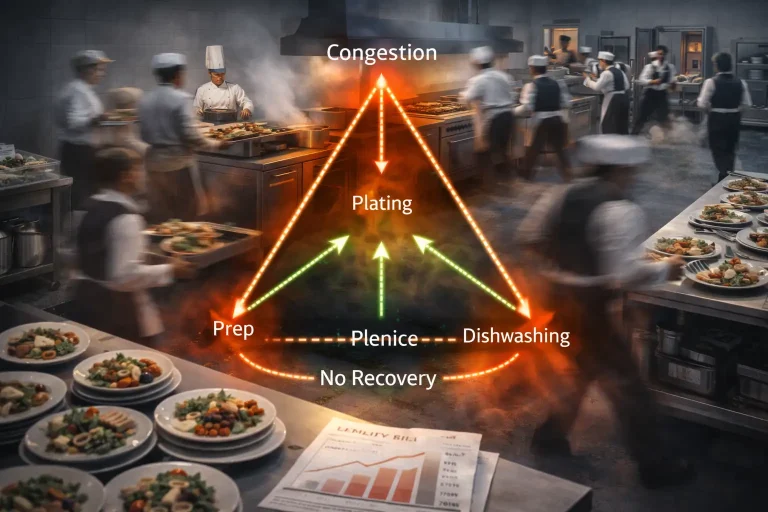
- Peak moments arrive without recovery time
Nothing in the equipment changes. What changes is behavior under pressure.
This is why kitchens that looked perfect on paper begin to demand fixes only weeks after opening.
Five Post-Opening Fixes We See Repeatedly
These fixes appear across resort, hotel, and banquet-driven kitchens. They are rarely surprises.
1️⃣ Extra Prep Tables Added to Patch Missing Landing Zones
What happens: Plating accelerates. Landing zones fill faster than expected. Chefs start placing trays wherever space exists.
Post-opening fix: Temporary prep tables are added near the pass.
Hidden cost: Cross-traffic increases, hygiene control weakens, and workflow clarity erodes.
Root cause: Landing zones were sized for drawings — not for peak dispatch rhythm.
2️⃣ Exhaust Extensions Added After Heat Complaints
What happens: Under full load, heat accumulates faster than ventilation can recover. Staff fatigue rises. Guest-side complaints begin.
Post-opening fix: Additional exhaust collars, canopies, or temporary duct extensions are installed.
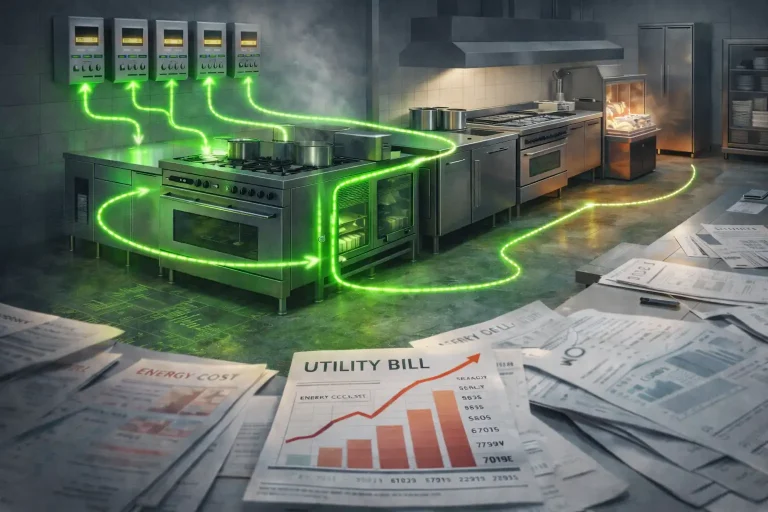
Hidden cost: Energy use spikes, noise increases, and ceiling coordination is compromised.
Root cause: Ventilation was approved for capacity, not for simultaneity.
3️⃣ Electrical Load Splitting After Breaker Trips
What happens: No breakers trip during testing. They trip during overlapping service and recovery cycles.
Post-opening fix: Electrical loads are redistributed, panels modified, or sequencing imposed on staff.
Hidden cost: Downtime, night work, and operational instability.
Root cause: Simultaneous demand was never mapped.
4️⃣ Storage Areas Reclaimed From Service Space
What happens: Actual storage needs exceed planned volumes. Service corridors become overflow zones.
Post-opening fix: Shelving and cold storage are added inside operational areas.
Hidden cost: Movement paths narrow. Safety margins shrink.
Root cause: Storage planning was based on lists — not on replenishment rhythm.
5️⃣ Workflow Rerouted With Tape, Signage, and Habit
What happens: Staff instinctively avoids friction points. Unofficial routes appear.
Post-opening fix: Tape on floors. Signs on walls. Verbal rules replace design intent.
Hidden cost: The kitchen operates on memory instead of structure.
Root cause: Workflow behavior was never tested under pressure.
Mini Case — Resort Banquet Kitchen (Week Two Intervention)
Scenario: A resort kitchen serving:
- Daily buffet service
- High-volume banquets
- Continuous room service
Opening week succeeded. By week two, complaints emerged.
Observed fixes:
- Additional prep tables near hot pass
- Manual staggering of equipment usage
- Reassigned storage inside service zones
Fix cost: Minor Operational cost: Major
Reality: Every fix addressed symptoms. None addressed the missing workflow validation that caused them.
Cost Multiplier by Project Phase
Phase | Typical Fix Cost | Real Impact |
Design | €1 | Concept adjustment |
Installation | €3–5 | Rework & delay |
Post-Opening | €8–12 | Revenue loss + morale erosion |
Key insight: Post-opening fixes are the most expensive not because they are complex — but because they disrupt live operations.

Why These Fixes Were Always Predictable
None of these issues are random. They appear because:
- Workflow was never validated under peak load
- Behavior was assumed, not engineered
- Commissioning stopped at equipment approval
These fixes are not failures. They are late discoveries.
Layout + Workflow Review — Before or After Opening
Most post-opening fixes could have been identified through:
- Peak-load workflow simulation
- Service overlap analysis
- Behavior-based layout review
Before opening, these reviews protect schedules. After opening, they protect morale and reputation.
What Could Have Been Done Before Opening ?
5-Point Preventive Checklist
1️⃣ Run a Full-Load Simulation Before Handover
Test the kitchen under realistic service pressure — simultaneous cooking, ventilation, dishwashing, and recovery cycles — not individual equipment checks.
2️⃣ Validate Workflow Timing, Not Just Layout
Confirm that plating, holding, dispatch, and return flows work within real service minutes, not only on drawings or ideal sequences.
3️⃣ Stress-Test MEP Systems Together
Verify that electrical, ventilation, water, and drainage systems remain stable when peak and recovery loads overlap.
4️⃣ Observe Staff Movement Under Pressure
Watch how staff naturally cluster, shortcut, and adapt during peak scenarios — then adjust layout and procedures before opening.
5️⃣ Schedule Commissioning With a Time Buffer
Allow correction and re-testing time before announcing opening dates, so system behavior can reveal itself without calendar pressure.
Final Insight
Post-opening kitchen fixes feel unavoidable only because responsibility often ends at handover.
Kitchens do not break after opening. They reveal what was never tested.
When layout, workflow, and behavior are reviewed before pressure arrives, post-opening fixes disappear — and kitchens stabilize faster.
FAQ – Post-Opening Kitchen Fixes
Why do kitchen problems appear only after opening?
Because real tempo, fatigue, and simultaneity are never fully present before opening.
Are post-opening fixes normal in hotel kitchens?
They are common — but not inevitable.
Can these fixes be predicted during design?
Yes, through workflow and peak-load validation.
Who pays for post-opening corrections?
Almost always the operator — directly or indirectly.
Is it cheaper to fix issues after opening or before?
Before opening, by a wide margin.