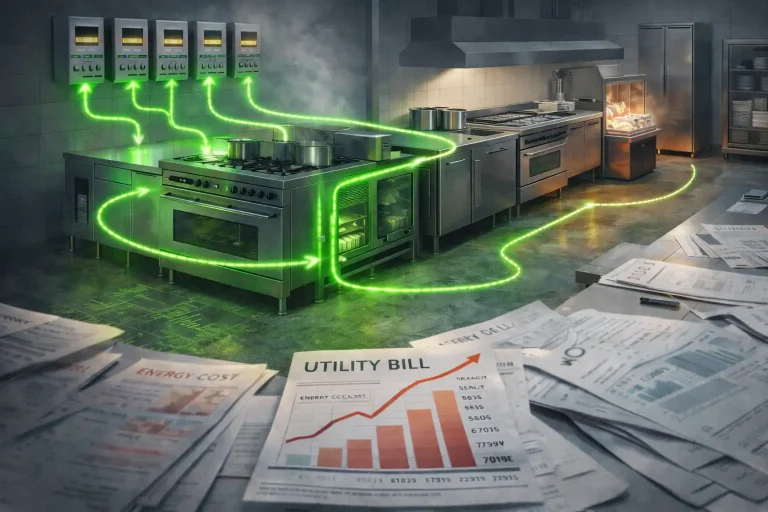
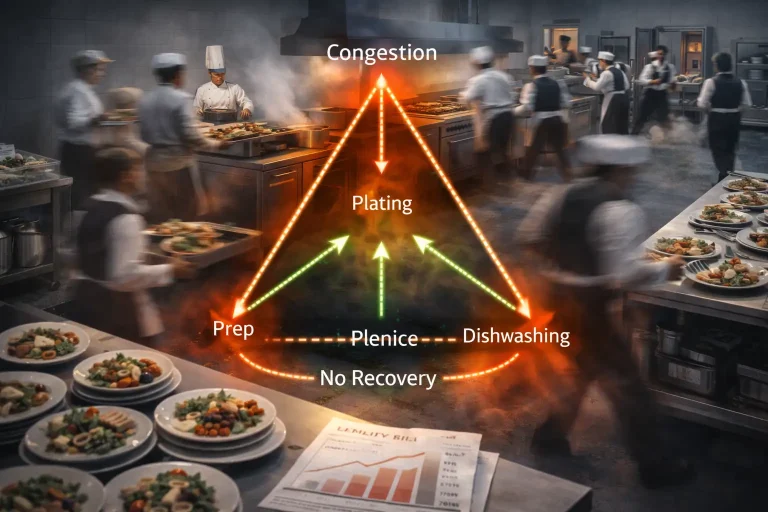
When Cost Starts Behaving Differently Than Price
Projects almost never fail at tender stage. On paper, everything aligns: prices are approved, quantities look clean, and the BOQ appears under control. At this point, most teams relax. The difficult work seems finished.
From the field, we see something else.
Cost does not break when a low price is approved. It breaks later, when installation begins and decisions leave spreadsheets. That is the moment cost stops behaving like a number and starts behaving like a reaction.
Nothing collapses immediately. Equipment installs. Power comes on. Progress continues. Still, the logic that once protected the budget begins to loosen quietly.
What the BOQ Is Expected to Control — And What It Never Does
The BOQ is assumed to perform three simple roles:
- define scope
- lock quantities
- align responsibilities between trades
During tender, this assumption feels safe. On site, it rarely survives intact.
The BOQ does not fail because it is incorrect. It fails because it is asked to carry decisions it was never designed to hold.
Lowest Price Does Not Break Quality — It Breaks Certainty
Lowest price equipment is often technically acceptable. It complies with specifications. It installs without objection. Initial checks pass.
What it usually lacks is certainty.
Wider tolerances, generic installation assumptions, and unresolved interfaces are not mistakes. They are the natural outcome of pricing models built around minimum compliance instead of execution clarity.
Once certainty weakens, the BOQ becomes a compensating tool. It starts absorbing questions instead of answering them.
The FOQ Gap Nobody Prices
FOQ documents exist to remove uncertainty. In lowest price selections, FOQ rarely disappears. It simply becomes thin.
Specifications say “acceptable.” Interfaces say “by others.” Accessories say “if required.” Each phrase feels harmless during tender. None of them close a question.
When FOQ leaves questions open:
- tolerances fall back into BOQ interpretation
- missing accessories migrate into site scope
- installation decisions move from design teams to execution teams
At that moment, BOQ behavior changes. It no longer reflects what was planned. It reflects what must be decided on site.
BOQ fails only when FOQ leaves questions unanswered.
How BOQ Behavior Shifts Across Project Phases
Tender Phase: Static Confidence
At tender stage, BOQ behaves predictably. Numbers stay stable. Comparisons feel objective. Risk remains theoretical.
Lowest price feels safe here because uncertainty has not yet met reality.
Installation Phase: Decision Absorption
Once installation begins, decisions accelerate. Interfaces must fit. Clearances must align. Documentation meets physical constraints.
Every unresolved FOQ point pushes a decision into the BOQ. The document stretches to absorb it.
Commissioning Phase: Hidden Adjustment
Systems run, but rarely optimally. Teams adjust timings, sequences, and workflows to compensate for earlier uncertainty.
Cost grows through labor and coordination, not invoices.
Early Operation Phase: Delayed Impact
During the first 60–90 days, operational load exposes the real cost. Staffing adjusts. Workarounds become routine. The BOQ has already changed — no one noticed when.
The Three Ways BOQ Multiplies Cost Without Changing Value
Quantity Drift
A single BOQ line expands quietly. Extra brackets, adapters, reinforcements, and hours appear. Each addition feels too small to challenge.
The BOQ remains unchanged. Quantity does not.
Scope Migration
Responsibilities blur. Who modifies openings? Who supplies interface kits? Who resolves misalignment?
Everyone helps. Ownership dissolves. BOQ absorbs the shift.
Silent Repricing
There are no variations. No approval cycles. Yet more labor, supervision, and coordination accumulate.
Cost increases without touching BOQ value.
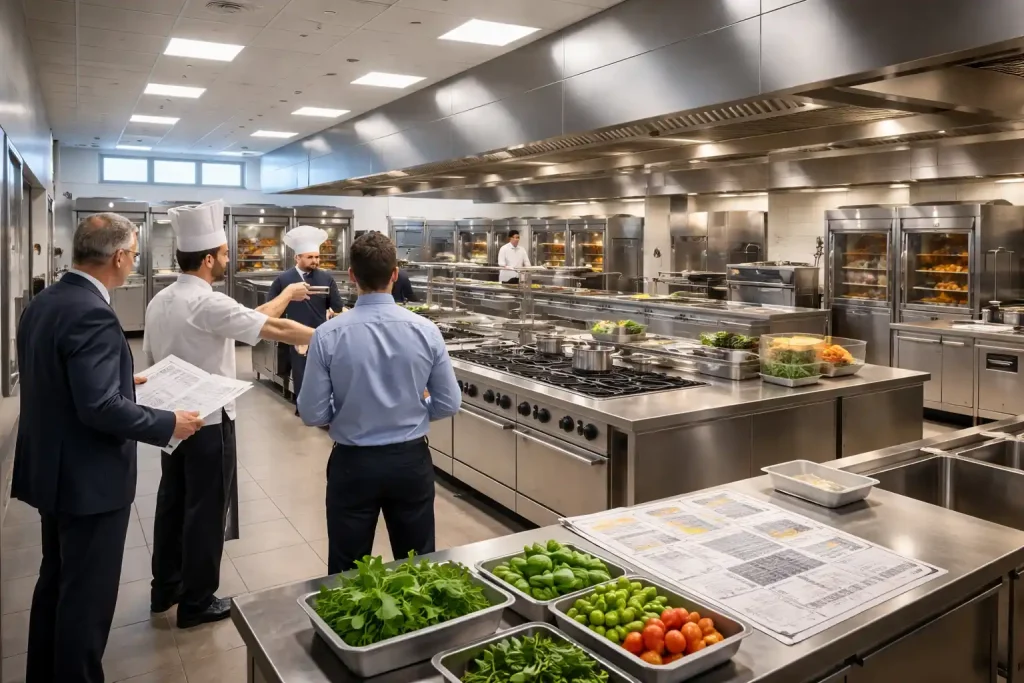
Why Everyone Is Still Right
This is the uncomfortable truth.
Procurement followed tender logic. Contractors protected delivery. Installers solved problems pragmatically. Operators adapted workflows.
No one acted incorrectly. Cost still grew.
Lowest price does not create mistakes. It creates conditions where behavior changes quietly.
Same BOQ Behavior, Different Regional Triggers
Triggers vary by geography. Behavior does not.
- In Africa, infrastructure variability forces on-site tolerance decisions
- In the Middle East, thermal and peak-load stress expose weak interfaces
- In Europe, inspections surface undocumented scope shifts
Different pressures. Identical BOQ response.
Where BOQ Stability Actually Comes From
BOQ stability depends on keeping pricing logic and technical responsibility aligned during execution, not before it.
This alignment is difficult when manufacturing, sourcing, and installation are fragmented. Manufacturer-led turnkey structures keep these elements connected.
Turkey-built production enables cost discipline without forcing reactive lowest-price substitutions. European brand integration remains selective, applied only where execution stability depends on it.
This is not a sourcing preference. It is an execution control mechanism.
What Lowest Price Decisions Look Like 12 Months After Opening
Twelve months after opening, the tender price no longer matters. No one discusses it. No one defends it. The number disappears from conversations.
What remains are the decisions made around it.
By this point, temporary solutions have become permanent routines. Workarounds are no longer questioned because operations have adapted to them. Extra steps feel normal. Delays are expected. Staffing levels quietly adjust to compensate for inefficiencies that were never written into the BOQ.
None of this appears as a failure. The kitchen works. Service continues. Guests rarely notice anything wrong.
Yet operational cost behaves differently.
Labor hours increase without being tracked as overruns. Supervision becomes heavier because systems require closer attention. Maintenance responds more often, not because equipment is defective, but because interfaces were never fully resolved at design stage.
What makes this phase difficult is not the cost itself, but its invisibility. There is no variation order to review. No claim to dispute. The project closed long ago.
This is where lowest price decisions finally settle into the operation — not as a line item, but as a way of working.
Twelve months later, no one remembers the tender price. Everyone lives with its consequences.
Price Control vs Cost Control
Price decisions happen once. Cost behavior unfolds over months.
Lowest price feels safe at tender stage because behavior has not yet begun. Once execution starts, cost responds to uncertainty, not numbers.
The difference matters.
Final Thought
Cost does not explode. It accumulates.
It grows when FOQ leaves gaps, when BOQ absorbs decisions, and when execution compensates quietly.
If you want to understand how your BOQ will behave once installation starts, review it before the site decides for you.
Send us your BOQ if you want to see its behavior before cost does.
FOQ – Frequently Observed Questions
Why does lowest price equipment cause issues during installation, not at tender stage?
Because tender reviews test price and compliance, not execution behavior. Installation exposes unresolved interfaces and assumptions, forcing decisions into the BOQ on site.
How does FOQ clarity affect BOQ stability in turnkey projects?
When FOQ leaves gaps, BOQ absorbs them during execution. Clear FOQs prevent tolerances, accessories, and responsibilities from drifting on site.
Can lowest price equipment work in a turnkey commercial kitchen project?
Yes, if execution control exists. Without aligned manufacturing, pricing logic, and site responsibility, lowest price increases BOQ interpretation during installation.
Why do costs increase without BOQ changes or variation orders?
Because cost also lives in labor time, coordination, and temporary fixes. BOQ values stay the same while BOQ behavior changes during execution.
How does a manufacturer-led turnkey model prevent BOQ drift?
By keeping pricing logic and technical responsibility under one control. Turkey-built production ensures cost discipline, while selective European brand integration maintains execution stability.